Not everywhere is as nice as social media claims
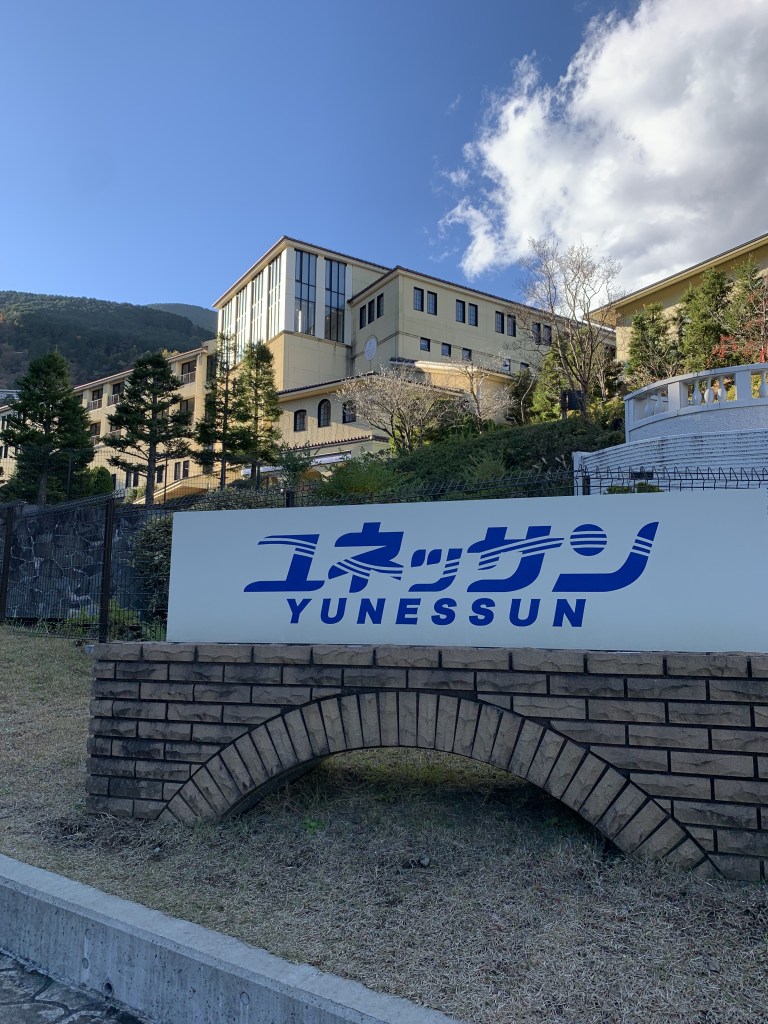
Overall, Yunessun Spa Resort reminded me of a UK holiday seafront: sad, faded, and well past its prime.
One thing that living in Japan has taught me is to brace for minor disappointment. There are a plethora of wide-eyed influencers touting ‘hidden gems’, ‘must not miss’ tourist spots, and the best ‘unknown’ viewing spots for seasonal blooms to their thousands of followers. Too many times, I have turned up to a location and half of Tokyo is already there. Most times though, the reality of TikTok-famous spots are still an enjoyable experience, despite the crowds. This was until my recent trip to Hakone where I decided to check out Hakone Kowakien Yunessun and encountered major disappointment.
When I was 17, a YouTuber I liked had visited Japan and released a few travel vlogs. Yunessun was the focus of one of those vlogs. It was at a time where I hadn’t started studying Japanese and there was still a layer of mystery to surrounding a country so far from the UK. I would then go on to study Japanese at uni, study abroad in Japan, and I now work and live in Tokyo.
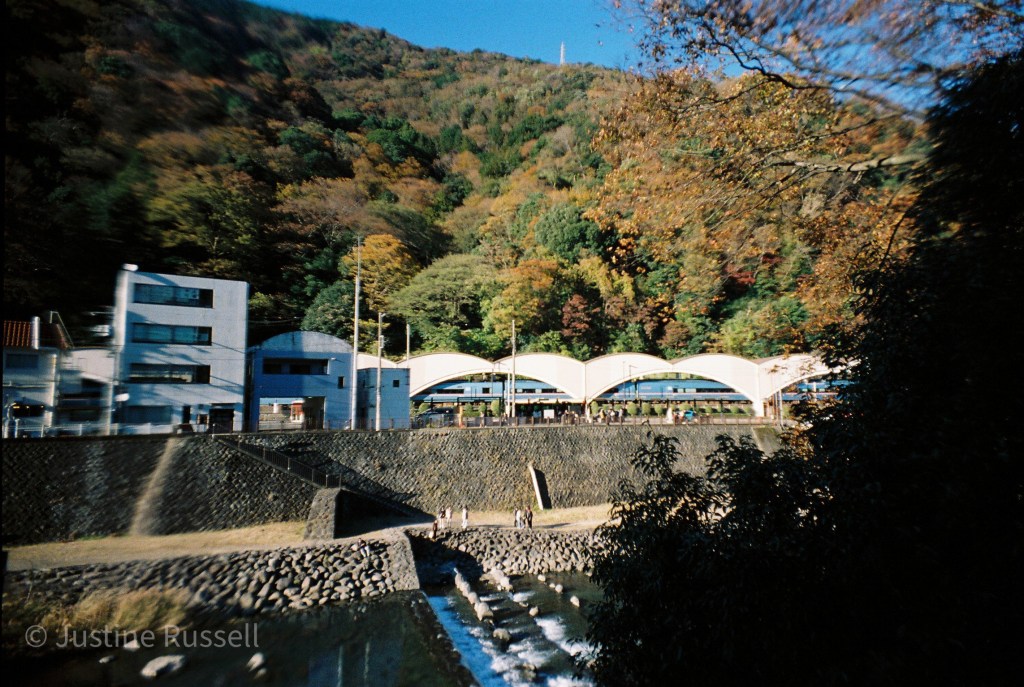
Hakone is one of my favourite places to visit. It is very easy to get to from Tokyo and there is enough public transportation for a non-driver like me to be able to comfortably explore the area. As a birthday treat, I decided to go to Hakone once more for the weekend. When I looked around for things I had not yet done I stumbled across Yunessun Onsen saved in my ‘want to visit’ Google Maps folder. I remembered that video I had watched years back about the ‘crazy’ onsen with all the different themed baths. Last year I had nurtured my inner child by buying a shinkansen-themed ekiben on my way to Nagano. This time, I decided that a trip to Yunessun would be another full circle moment for my 17-year-old self.
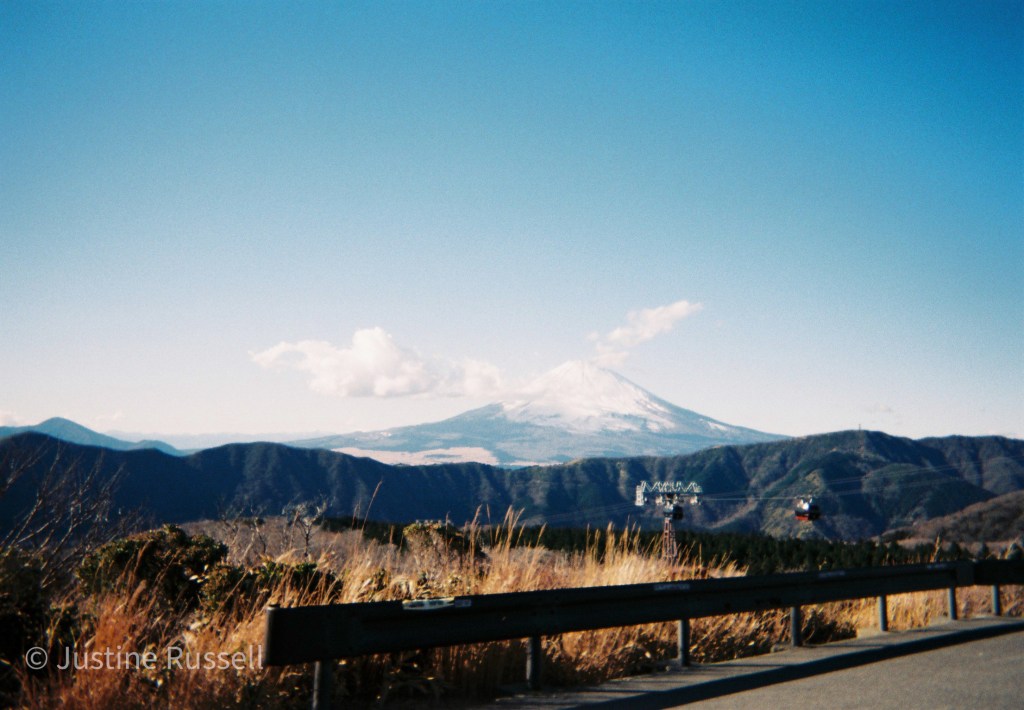
Hakone Kowakien Yunessun bills itself as a kind of ‘spa resort’ with two main sections: the Yunessun area and the Mori no Yu area. I visited both. The Yunessun area is advertised as an amusement park where you wear a swimming costume and covered tattoos are permitted. The Mori no Yu area is supposed to be a more traditional onsen experience and is therefore a nude area separated by gender with no tattoos allowed. There are also other facilities in the building like restaurants and rest areas.
I had dutifully read reviews of the resort before turning up and watched TikToks of travel influencers recommending Yunessun (a mistake). Most of the English-language reviews I encountered were overwhelmingly positive with a few gripes but nothing struck me as a glaring red flag. I didn’t go into Yunessun expecting a traditional onsen experience but rather a more fun amusement park experience.
What I actually experienced was comically awful. I got an all-area pass (covering Yunessun and Mori no Yu) for ¥3,500 which was a steep price for an onsen facility. I had paid around ¥3,100 in Atami at Ocean Spa Fuua: a nice spa with Finnish and bedrock saunas, and a balcony onsen with a beautiful ocean view. Other than Ocean Spa Fuua, the average price for an onsen has usually been between ¥500 and ¥1,500. The comparable pricing between Yunessun and Ocean Spa Fuua implied that I would have a similar experience in Yunessun as Ocean Spa Fuua. I was mistaken.
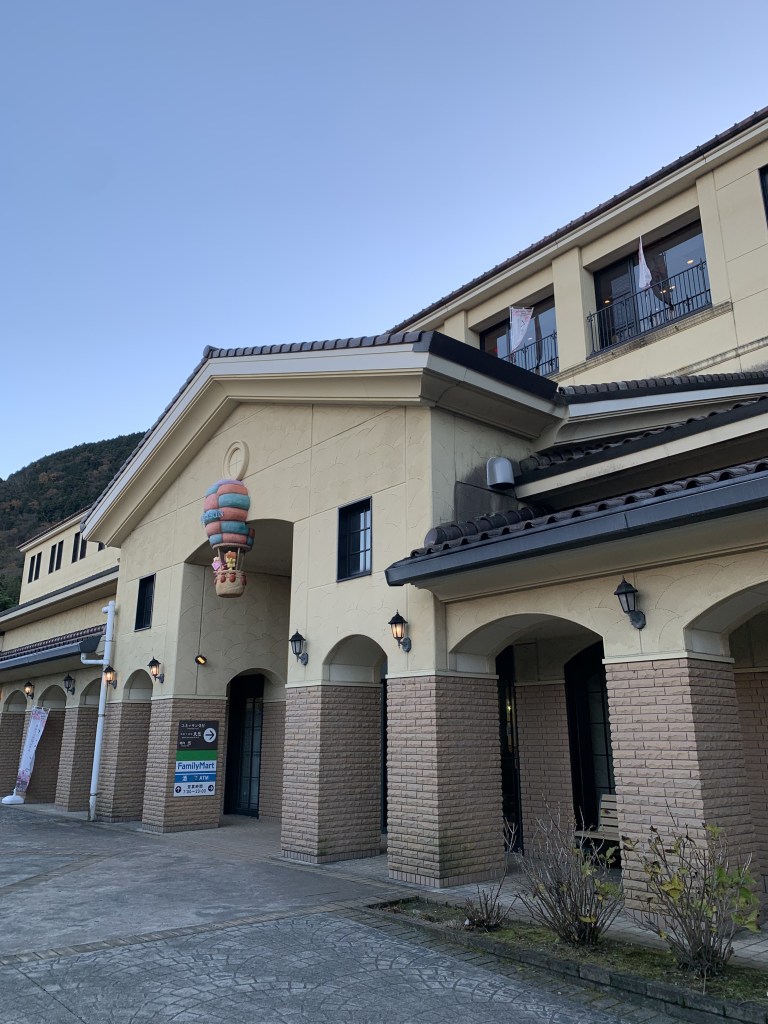
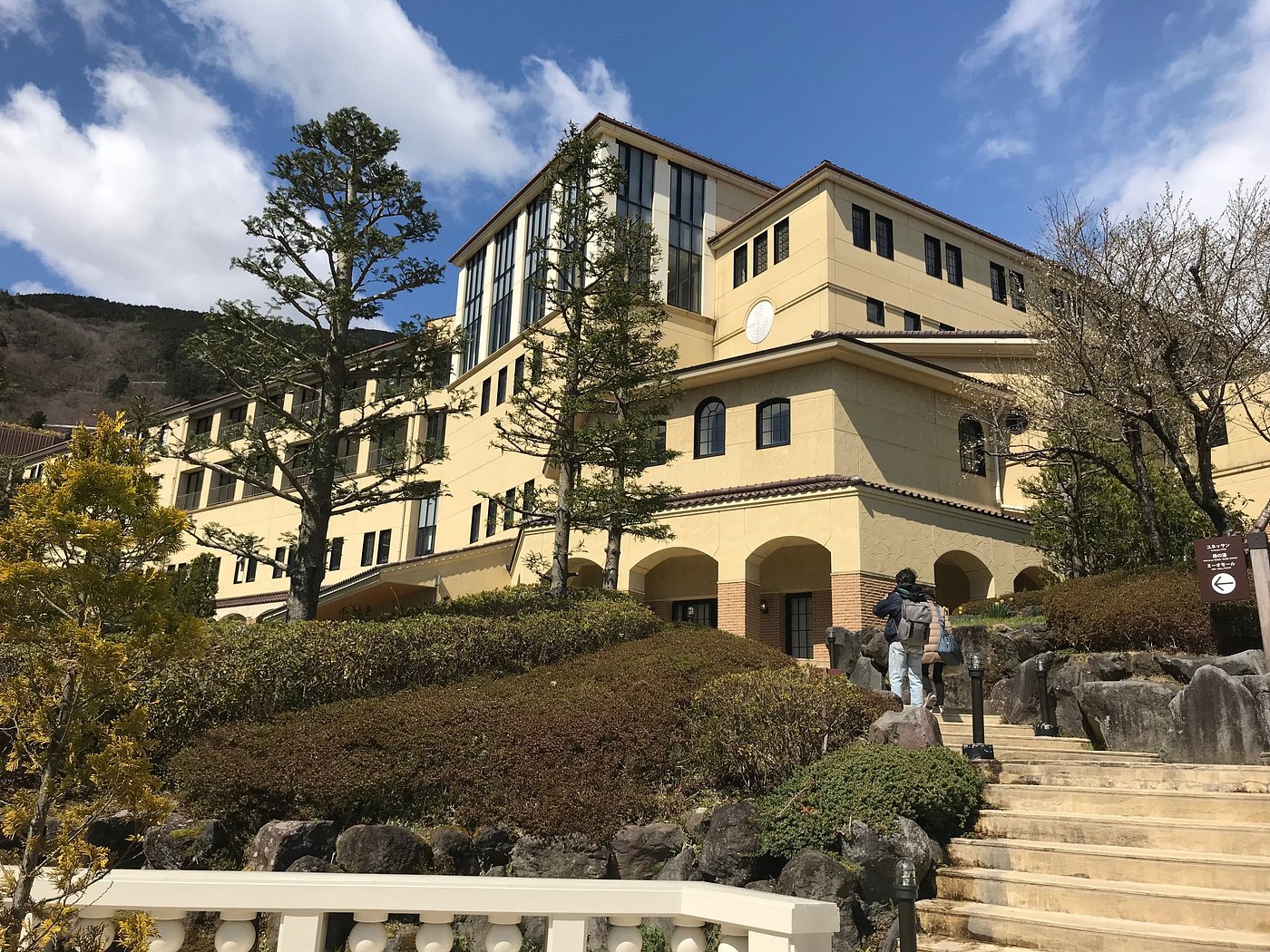
When arriving, the building seemed huge. The entrance was on the fourth floor and so I had to walk past an arcade, a shop, and some food stands. It felt a little like duty free, being forced to walk past acres of dizzying perfumes before reaching WHSmith to buy overpriced water.
At the entrance you’re given an wristband with a barcode that you can use to pay for things within the facility. I didn’t spend any additional money other than the ¥3,500 entry. The state of the changing rooms was a bad omen for the rest of the experience. The floor had puddles of water and it was poorly lit. Half the lockers were broken and taped over.
I first went to the Yunessun section of the resort. This was the main draw of the spa resort, advertising novelty baths (coffee, wine, sake, and green tea) and fun outdoor baths (a viewing platform, a waterfall, cave baths, and waterslides). The expectation before entering an onsen is to have a very vigorous shower and, for swimming pools, it is the norm to rinse off your body before getting into the water. At Yunessun, there was only an obligatory foot spray you had to walk through. There were showers available, but rinsing off wasn’t required and from what I witnessed, almost no one showered before getting into the baths.

At first glance, a pool called ‘Aegean Sea of Gods’ was the only visible bath in the place, there was a fast-food restaurant of some kind beside it and steps leading up to the other baths. Why it was called ‘Aegean Sea of Gods’ baffled me, perhaps the small children splashing around were the sirens’ understudies. Another strange decision was the lack of clear signage pointing to various baths and so I ended up wandering around the cavernous building until I stumbled upon the baths I wanted. Maybe it was to keep with the Greek theming: making visitors go through a kind of Daedalus’ labyrinth.
What surprised me the most was how big and empty Yunessun was. There was a lot of space available yet very few baths. I went on a normal Friday in November so there weren’t too many visitors, but even the few people there filled up all the baths. I couldn’t imagine it busier than it was.
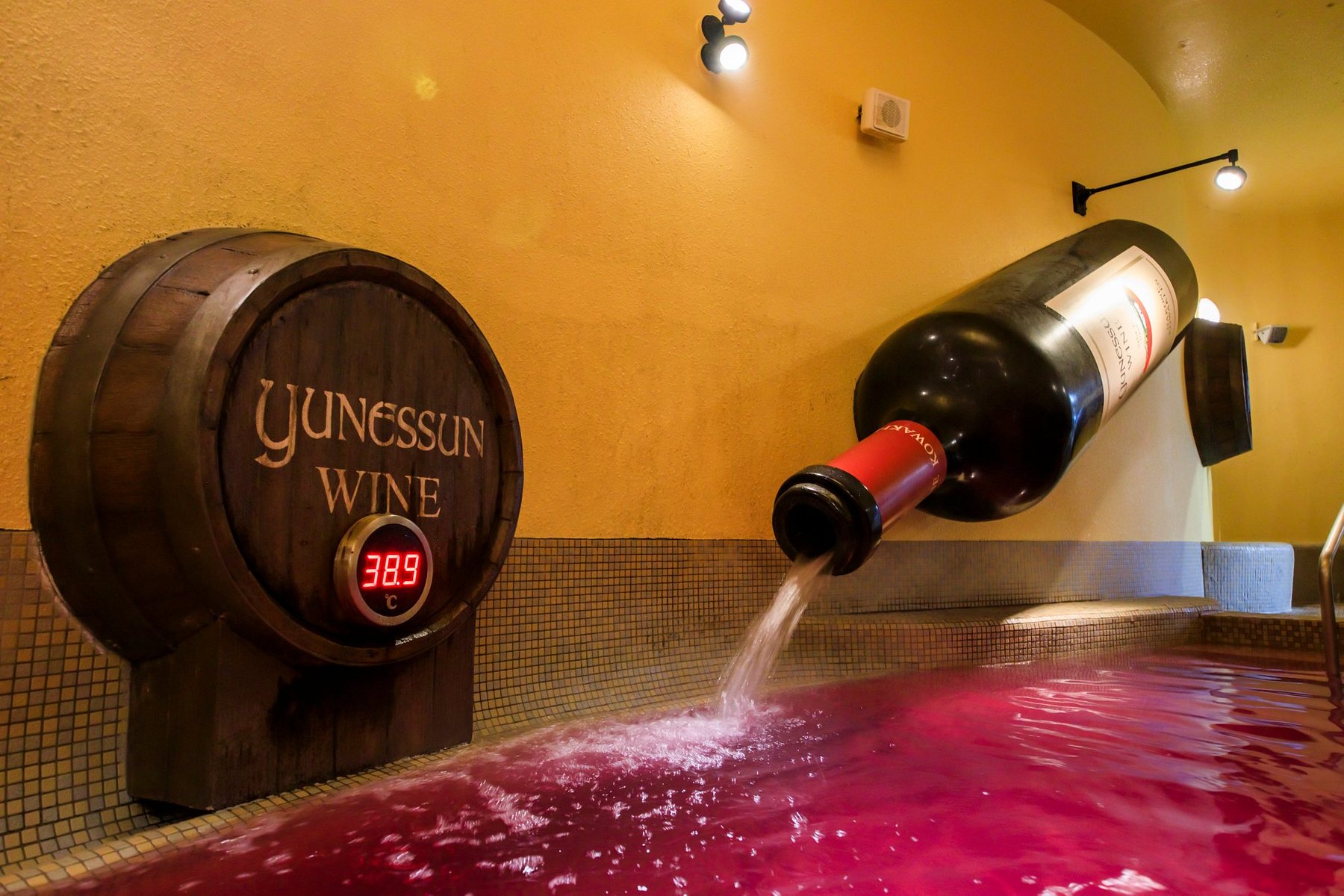
The first themed bath that I managed to find was the wine bath, nestled in a little tiny corner beside Dr. Fish foot bath for those willing to push the unhygienic conditions further. The wine bath was a decent size and there was no one there when I turned up. The water was a pinky-red colour and it just smelt a little like sweetened chlorine. If there was any wine there, it was incredibly diluted. I stayed for a few minutes before leaving in search of the other themed baths.
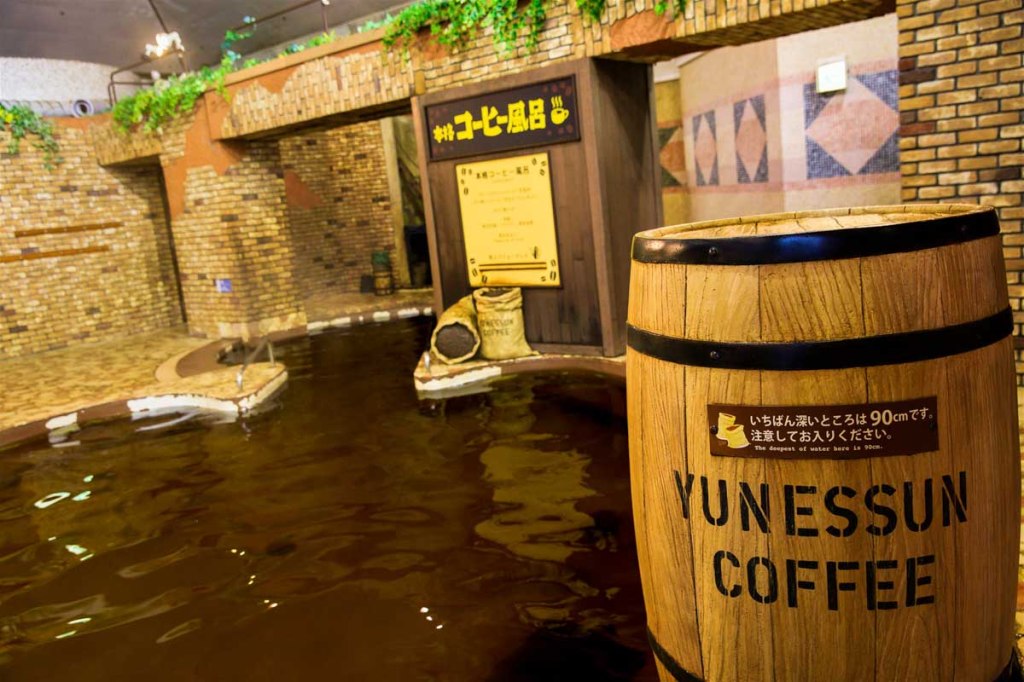
The coffee bath at least smelt like coffee, but getting into the water felt super icky. Maybe it was the deep brown colour of the bath or the tired decorations but it just felt very grimy. Like the wine bath, it wasn’t too small, but it was filled with people. I didn’t bother waiting around for either the coffee or the wine sessions where staff chuck more coffee and wine into the water and at the guests.
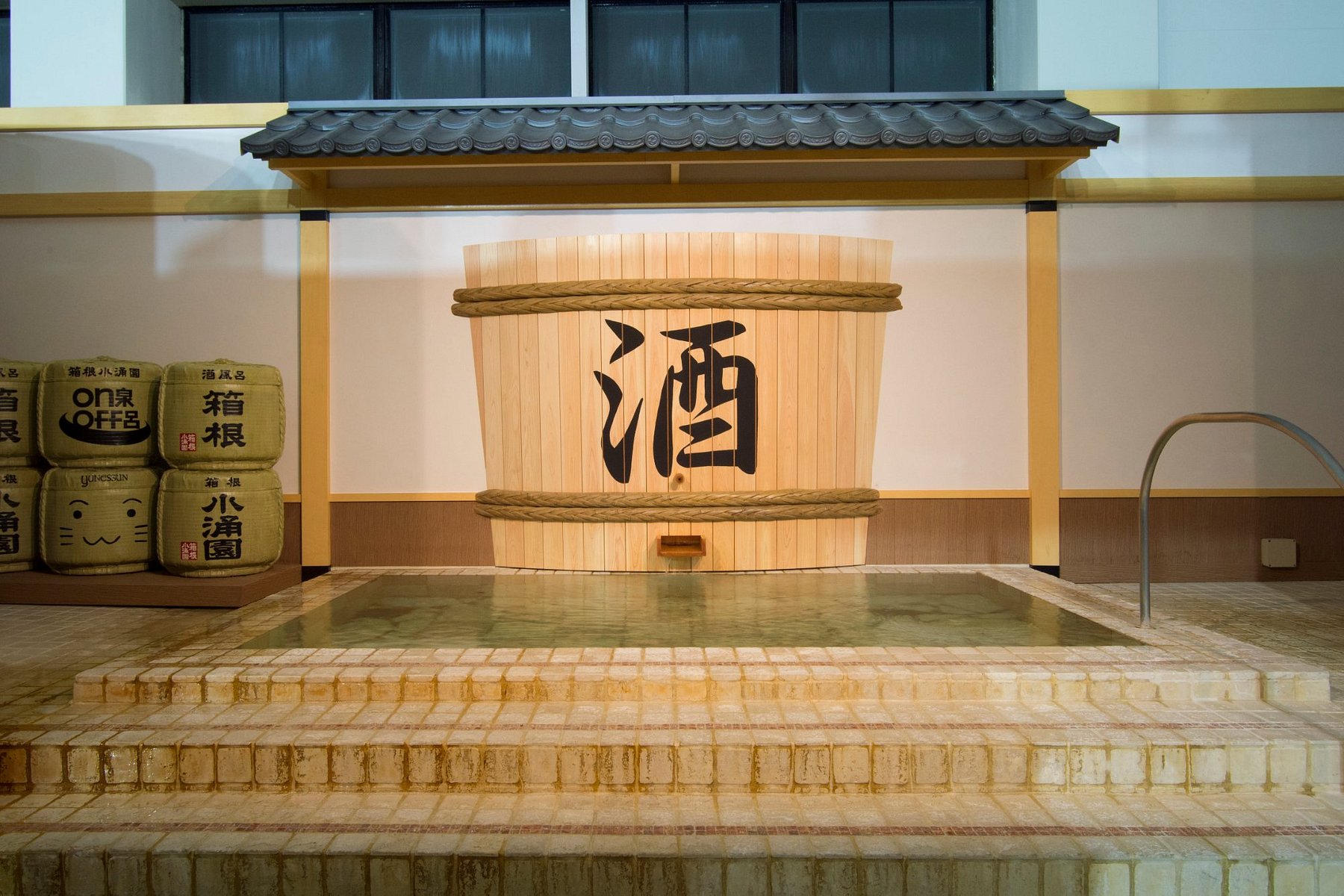
The final two themed baths were so tiny it was insulting. The sake bath was awash in neon signs and was the only bath that was close to hot. It could sit maybe 5 people comfortably. Only if those people didn’t bring their huge inflatable pool rings and floats with them, which the Japanese general public did. The green tea bath was the most offensive, seating two people comfortably and more if you were willing to squeeze, which a family of three did with me. Both baths were just filled with chlorinated water.
I had been excited to visit the outdoor baths, in particular the waterfall and cave baths. However, they were all closed for renovations. I was visiting at an off-peak time, but there was no indication on the English version of the website that there were sections of the resort that were closed. On the Japanese version there was a section dedicated to news and information with updates but it was so unobtrusive that I missed it. Furthermore, when I was buying the tickets in person, I didn’t see any signs indicating this closure; it was only when I had already gone inside that there were clear bilingual signs. To pay ¥3,500 with all the outdoor baths (bar one) closed without clearly displaying this on the website or informing visitors when they buy the tickets feels disingenuous.
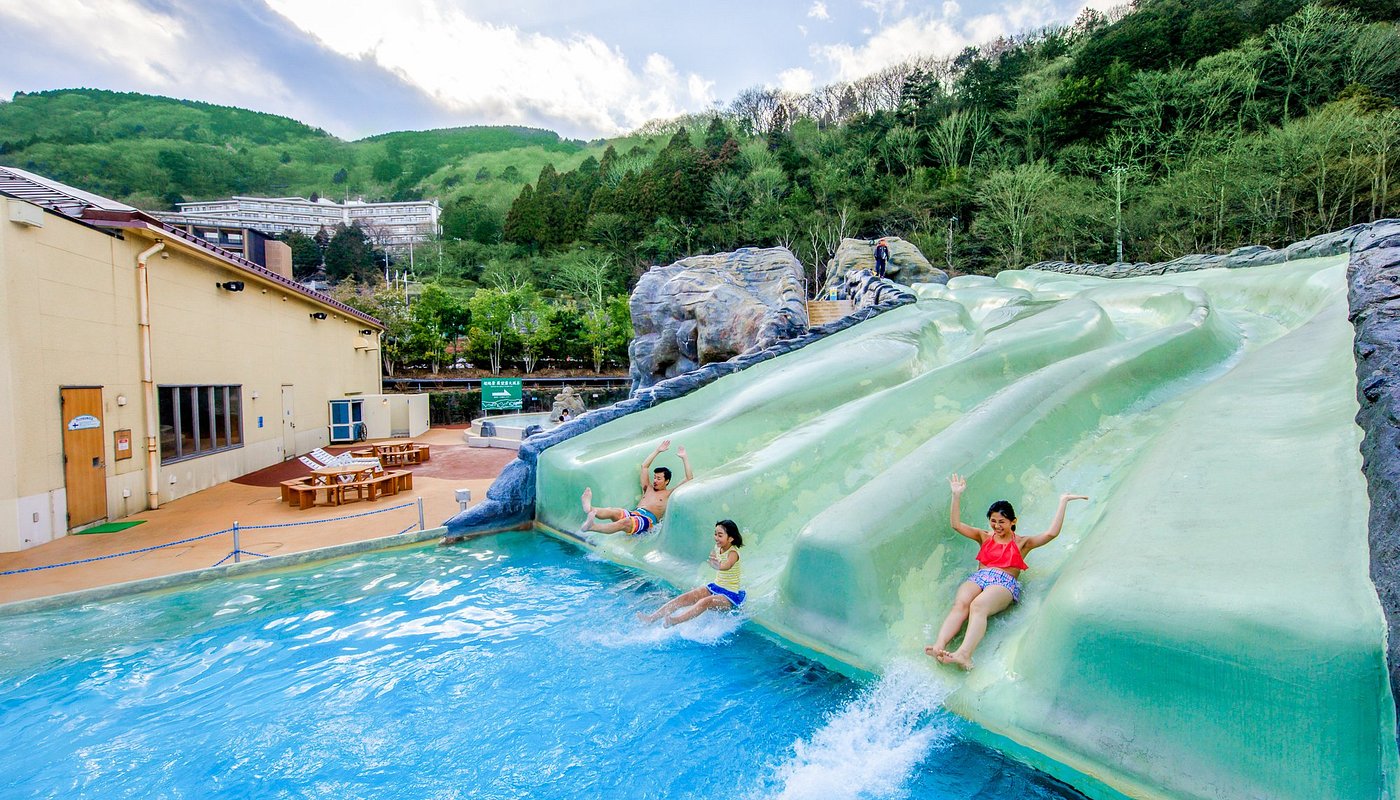
To make matters worse, to access the one outdoor bath that was open (a series of step baths looking out at the mountain view) you had to walk up a set of stairs and go across the flowing pool that was so filled with pool floaties and rings that you only had a vague indication that people were also there, to get to a tiny door that was definitely a fire escape. Then you had to walk around a car park on a sodden rug in plain view of construction workers, go up more steps again to cross a bridge going over a street with people walking along and cars, and then walk some more to reach the baths. It was late November so it was chilly, around 10˚C, and I was very cold in just my swimming costume. It was a long journey to get to underwhelming, lukewarm, and dirty baths with an underwhelming view. For a lovely view of the mountains, I recommend visiting the Hakone Open-Air Museum.

Mori no Yu, the more traditional onsen area, was in a state of complete disrepair. I was expecting the baths to be hotter here, thinking that the Yunessun baths were lukewarm as people might want to spend a longer time in them than in onsen baths. However, once more, I was disappointed. There was only one bath that was hot enough. The baths of Mori no Yu were dated and as dirty as Yunessun’s. There were rust stains at the bottom of many of the baths and one had an electric pump cabinet door that was wide open, with duct tape fluttering uselessly. Mori no Yu was advertised as being the relaxing portion of Yunessun, but I was on edge, uncomfortable, and very aware of the grime surrounding my naked body. I stayed maybe twenty minutes in Mori no Yu before leaving Yunessun altogether.
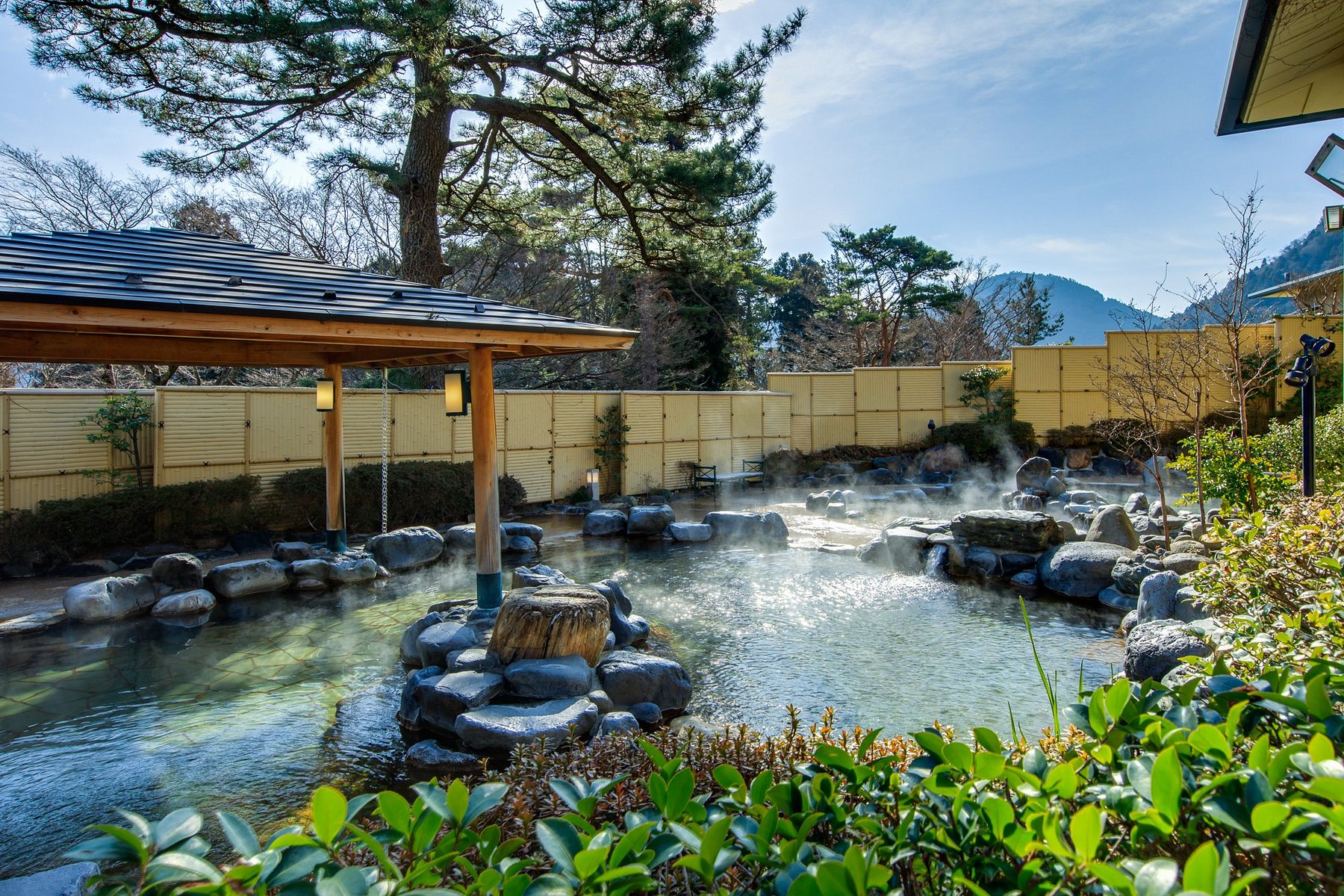
The main issue of Yunessun was the lack of cleanliness. Everything felt covered in a layer of grime and I couldn’t relax in any of the baths because the water seemed unclean and I was instead playing a ‘will my skin break out?’ roulette. I hadn’t brought flip-flops and so had to walk around bare-foot on the bumpy and painful stone floor and over the suspiciously drenched rugs they had laid out in some areas. There was mould, hair, and peeling paint and wallpaper. It was clear no one cared about maintaining and cleaning the facilities properly.
Another major issue was that the baths were nowhere near hot enough. They were lukewarm, around 30-35˚C maybe. I’m used to onsens being between 38˚C and 44˚C. At that temperature, you feel deeply relaxed and leave the onsen feeling better than before you went in. At Yunessun, I felt worse. I’m not one who enjoys overly hot onsens, either. I have a memory of me in Nozawa Onsen in one of the free public onsens huddled over in a crouch with my friends trying to dip even a toe into virtually volcanic water. But the tepid water in even the traditional onsen area was a huge disappointment.
As I went from bath to bath, I initially grappled with whether I should label what I was feeling as disappointment. Whether I was allowed to. Compared to other international visitors there, I had only travelled from Tokyo, but I had still dedicated time and money to Yunessun when I could have done a different activity that afternoon. I concluded that, yes, I could be disappointed but I was going to find the humour in the situation. Which is how I ended up giggling to myself as I went around, shaking my little head as I stepped into yet another tepid bath. I did get a few wary glances as I laughed to myself, but the acknowledgement that this was just a bad spa resort helped me enjoy the experience a little.
I’m glad I visited at this stage of my life. If I had gone as an exchange student or even a year ago, I think I would have kidded myself into thinking that it was not so bad and actually an okay experience. Instead, I was able to acknowledge as I was there that it was disappointing and didn’t lie to friends when asked about it. It had been a place I had wanted to visit for a long time and I expected better. I found out in the past Yunessun had been a lot nicer with an expansive outdoor area called ‘Yutopia’ primarily for adults and the themed baths were also all outdoors and bigger. It’s a shame that I wasn’t able to visit this version of Yunessun that seemed to care more about the visitor’s experience rather than profits.
The mystery remained, as I squeezed into an overcrowded bus to leave Yunessun behind me, as to why it had so many good reviews and why so many influencers on TikTok and YouTube recommended it. I understand families enjoying it as they aren’t separated by gender and there are a few baths that the children might enjoy. I also noticed that many reviews by overseas tourists admitted being too intimidated to go to an onsen or had tattoos. Those who don’t dare to go to an onsen or don’t know what to expect from an onsen visiting Yunessun as their first onsen experience may explain why Yunessun has good reviews in an area known for its amazing day-trip onsens and ryokans. For those who are scared or embarrassed to get naked with strangers, Yunessun is safer. Yet it’s like Thornton Heath Leisure Centre pool near where I grew up: a vacuous space with nothing special and probably too much pee in the water.
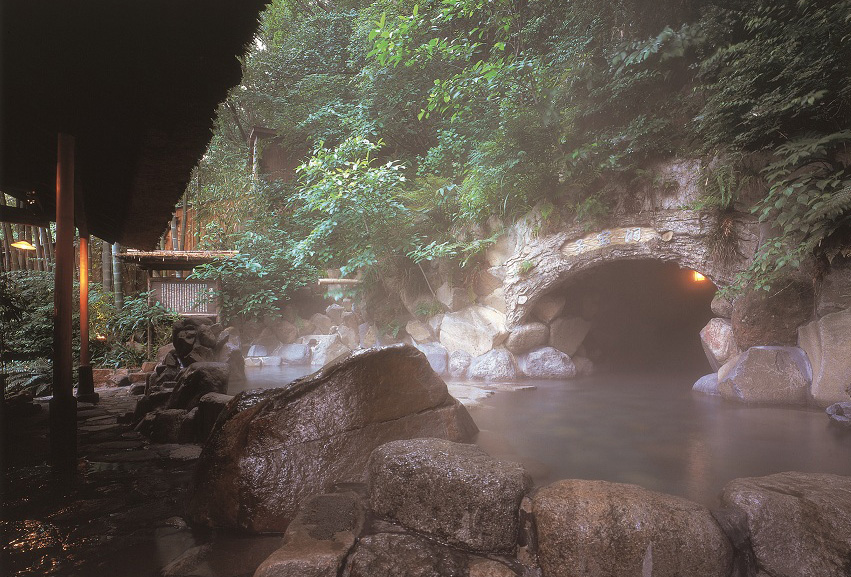
Finally, a list of recommendations for onsens that I have visited that are well worth the journey:
In Hakone
- Tenzan Onsen (tattoo-friendly) (Hakone Yumoto)
- Hakone Yuryo (covered tattoos allowed) (Hakone Yumoto)
Hostels and Hotels with onsens in Hakone
- K’s House Hakone (Hakone Yumoto)
- Emblem Flow Hakone (Gora)
- Hot Spring Hotel Hakone Suisen (Ohiradai)
In Tokyo
- Tokyo Somei Onsen Sakura (Sugamo)
In Atami
In Chichibu
 Justine Russell